After several proceedings and delays in the past several years, a Solano County Superior Court trial date still remains pending for a Vallejo gang member accused, with two others, of fatally shooting a man more than three years ago, one of several killings by four other gang members between 2017 and 2018 in Vallejo.
Desean Lamar Johnson, 25, was scheduled to appear Monday in Solano County Superior Court for a trial setting, but court records show that Judge William J. Pendergast rescheduled the proceedings for 8:30 a.m. Sept. 2 in Department 11 in the Justice Center in Fairfield. Johnson is represented by criminal defense attorney Tim A. Pori.
Vallejo police investigators believe Johnson, Nickolas James Howland, 23, and Steven Tezel Sanderson, 20, shot and killed Coy Lacy Jr., 30, in January 2018.
Howland, a rapper, and Sanderson are also charged with fatally shooting DeMario Williams in September 2017. They each will face two murder charges at trial. Howland is represented by criminal defense attorney Curtis Boyd, Sanderson by defense attorney John Coffer.
A third man linked to Williams’ death, Tiquon Ramon Hicks Jr., 24, was sentenced on March 5, 2020, to more than 27 years in state prison for the second-degree murder.
A fifth reputed member of the 200 Westwood gang, which gets its name from a Vallejo neighborhood street, Damaria Tijaraye Haskins, 23, was indicted in November 2018 by a Solano County grand jury for the 2017 fatal shooting of Erik Green and the attempted murder of his brother, Eian. Haskins returns to Department 11 at 8:30 a.m. Aug. 24 for a trial setting. He is represented by criminal defense attorney Carol Long.
Pendergast also has ordered Howland and Sanderson to return for some pretrial matters, including a trial readiness conference at 8:30 a.m. Sept. 27 and a trial management conference at 8:30 a.m. Oct. 28. Their jury trial is scheduled to being at 9:30 a.m. Nov. 1.
When Howland returns for the trial, Boyd will ask Pendergast to “sever” the trial, or, in other words, order one for Howland, another for Sanderson.
In December 2019, Pendergast agreed to sever all but one of the remaining pending trials, Howland and Sanderson’s.
Deputy District Attorney Eric Charm led the prosecution in the Hicks case and is the lead prosecutor in the pending murder trials.
In light of a federal judge’s concerns over the state’s planned removal of nearly 200 trees to make way for a 12-lane road project through Oak Hill, the Texas Department of Transportation last week agreed to temporarily halt its tree-clearing work in southwest Austin.
U.S. District Judge Robert Pitman will make a final determination on the fate of the trees after hearing legal arguments on Sept. 2.
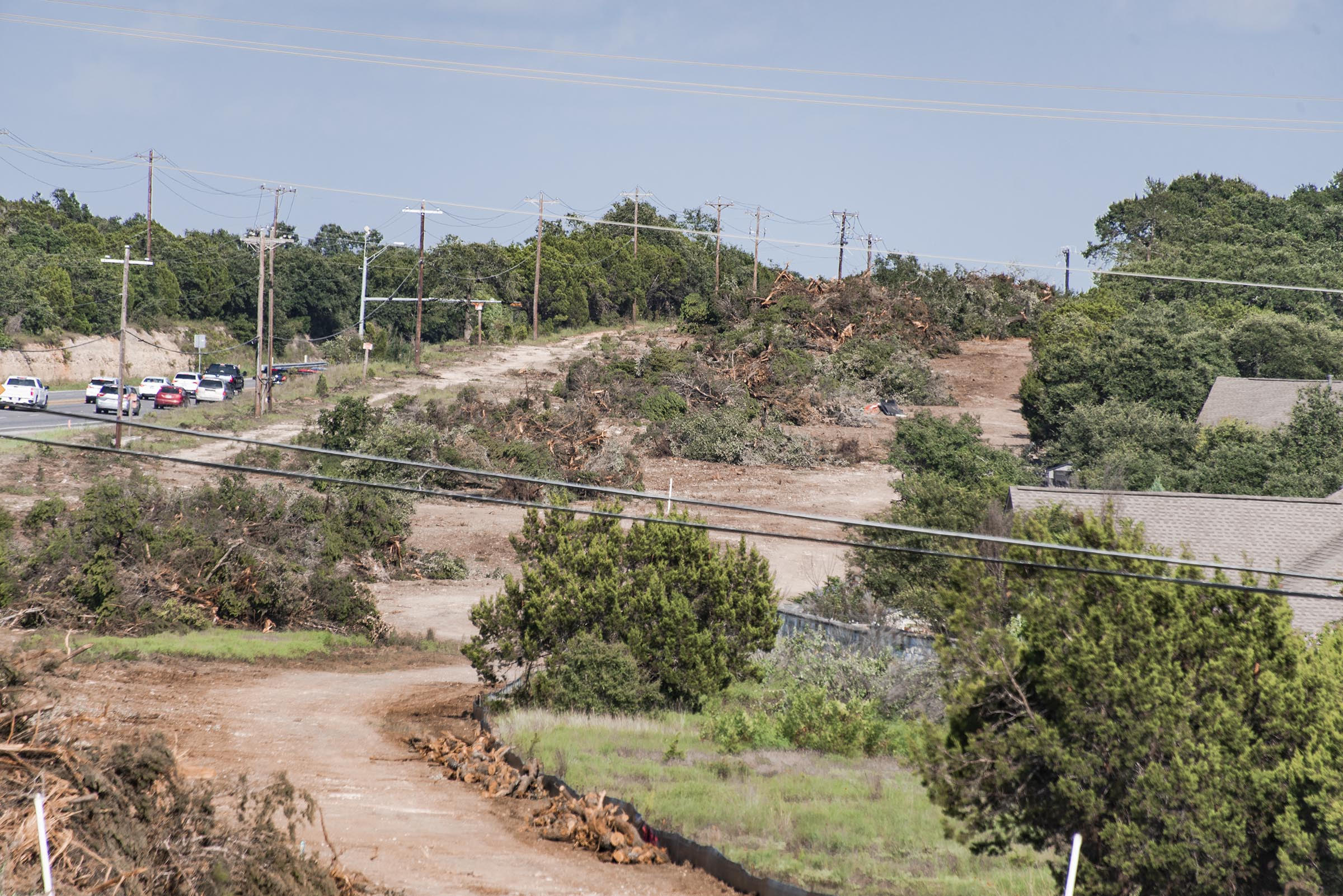
By the time the stop-work order was issued last Friday, the Texas Department of Transportation had already uprooted enough trees to stack, by its estimation, about a dozen large piles that were slated for mulching. TxDOT broke ground on the $674 million project in early July and anticipates completing it by 2025 or 2026.
Dubbed the Oak Hill Parkway Project, the road work – part of the agency’s Texas Clear Lanes initiative – will span six freeway lanes and six frontage road lanes, with part of the freeway elevated 30 feet above ground.
The project has been on the drawing board for at least a decade, but there has been little agreement between TxDOT and Oak Hill residents over how best to design a roadway that would have the least environmental impact while resolving the long-standing bottleneck at the Oak Hill “Y” at U.S. Highway 290 and State Highway 75.
The plaintiffs in the legal challenge, led by the Save Barton Creek Association and a number of Oak Hill residents, have advocated for an alternative plan that would include an at-grade six-lane parkway with a local boulevard and bridged cross-streets to keep Oak Hill connected. Their plan would preserve large trees and create a Williamson Creek Greenbelt Park. Additionally, advocates say, the alternative plan would be cheaper and more environmentally sound.
Kelly Davis, an attorney with the Save Our Springs Alliance, and William Gammon, a lawyer in private practice, argued the plaintiffs’ case last week during a phone conference with Judge Pitman. The court denied the temporary restraining order they sought but instructed TxDOT to stop clearing protected and heritage trees as part of a separate application seeking a temporary injunction. That alone was cause for celebration although it is difficult to predict how the court will rule after the Sept. 2 hearing.
Prior to last week’s outcome, Oak Hill resident Cynthia Wilcox was expressing anguish over the trees already removed and the hundreds of others on the chopping block.
“That’s just the beginning of complete devastation of all of these huge oaks in Oak Hill,” Wilcox said of the first round of tree-clearing. “It’s just shocking that they are building this completely oversized project and removing all of these trees that are hundreds of years old. They don’t have any appreciation for a tree that has taken a hundred years to grow, or the fact that you can’t replace the functionality of that tree,” she said. “It’s going to take several hundred years to grow another one that large.”
Wilcox has lived in Oak Hill since the early 2000s and is president of the Oak Hill Association of Neighborhoods. Like many residents, she has family living in the area. The road project, she said, will sever the community into three pieces, making it more difficult to move about to connect with family and friends.
“From the very beginning, that’s one of the things the community tried to communicate (to TxDOT): We would like a grade-level parkway so we can still get around in our community. So if you have an elevated freeway between you and a business, that poses a big barrier, not to mention if it’s between you and a school, or you and your mom. It makes it much more complicated to get around,” she said.
The court filing included affidavits from both residents and professionals who addressed the potential adverse affects of the construction project. One resident, Crystal Bomer, testified that TxDOT intends to remove three large oak trees on her family’s property, located less than a mile from the “Y” in Oak Hill.
No amount of money could replace the value of the trees, Bomer said in her affidavit. “They help our land from eroding; they provide shade and beauty. They provide privacy and noise reduction from the highway. These trees on my property and in the right-of-way provide oxygen, so our quality of life is being affected. These mature trees cannot be replaced in our lifetime.”
The Austin Monitor’s work is made possible by donations from the community. Though our reporting covers donors from time to time, we are careful to keep business and editorial efforts separate while maintaining transparency. A complete list of donors is available here, and our code of ethics is explained here.
This story has been changed since publication to clarify that TxDOT has stopped clearing trees voluntarily, in light of concerns expressed by the court during the Friday phone conference.
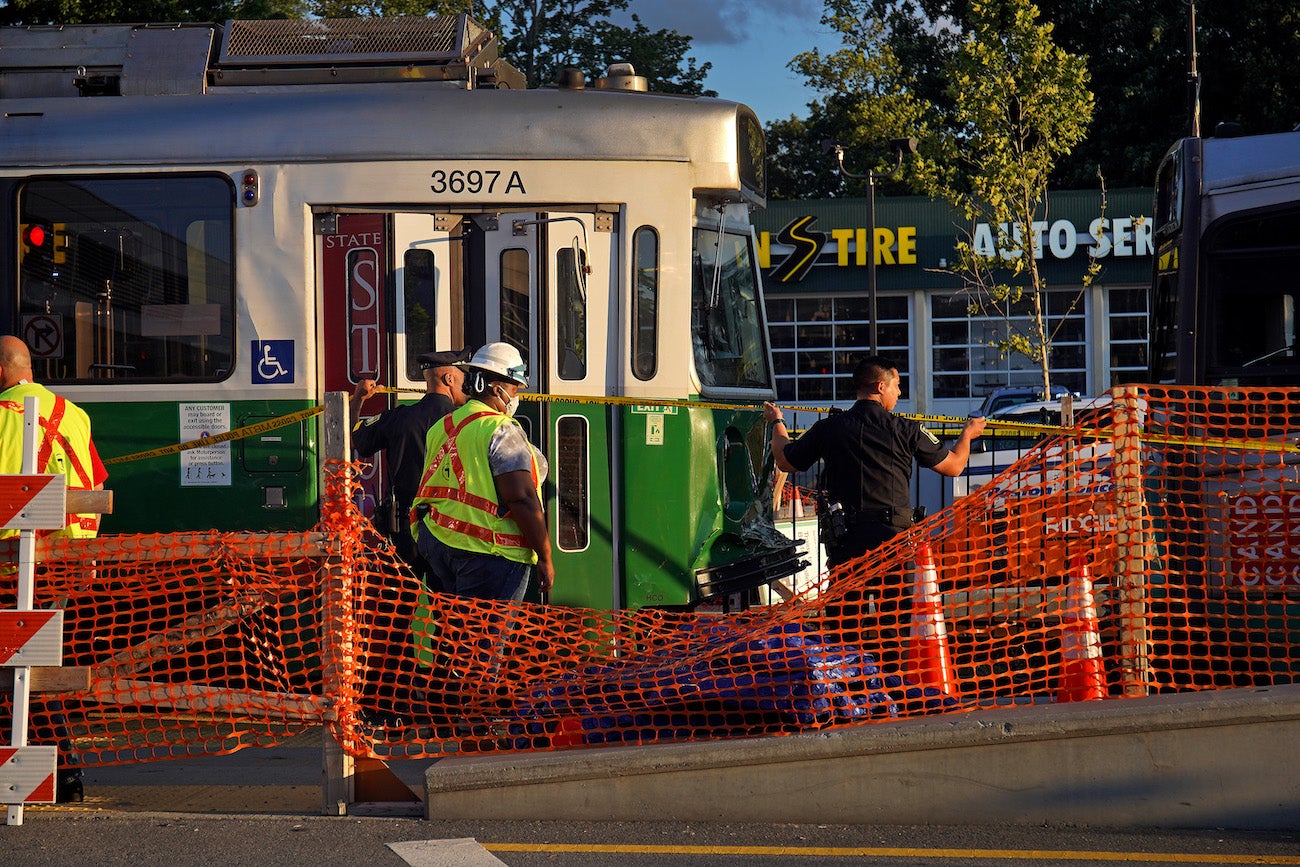
The National Transportation Safety Board is working to figure out what happened Friday evening when two MBTA Green Line trains crashed into one another near Boston University, leaving 25 people injured.
Investigators from the NTSB were on the scene Sunday gathering information such as how fast the train was moving when it rammed into the backside of the trolley ahead of it, Jennifer Gabris, an agency spokesperson, toldThe Boston Globe.
“At this early stage of an investigation, NTSB does not state a cause but will provide factual information when available,” she said in an email. “Investigations involving injuries and other major investigations currently take between 12 and 24 months to complete.”
Advertisement:
Update: In an update on their investigation Monday, the NTSB said 27 people, not 25, were taken to hospitals with nonlife-threatening injuries. The agency also said: “Preliminary review of the event recorder data indicated that the train that was hit was traveling at approximately 10 mph. The striking train overtook the other train at approximately 30 mph.” The agency noted this preliminary information may change as the investigation continues. “NTSB will issue a preliminary report within 30 days of completing on scene work,” the update said. Read the full update here.
MBTA officials on Saturday placed one of four trolley operators on board the two trains on paid administrative leave — a decision that was made based on developments in the ongoing probe, a spokesperson for that agency told the newspaper.
Advertisement:
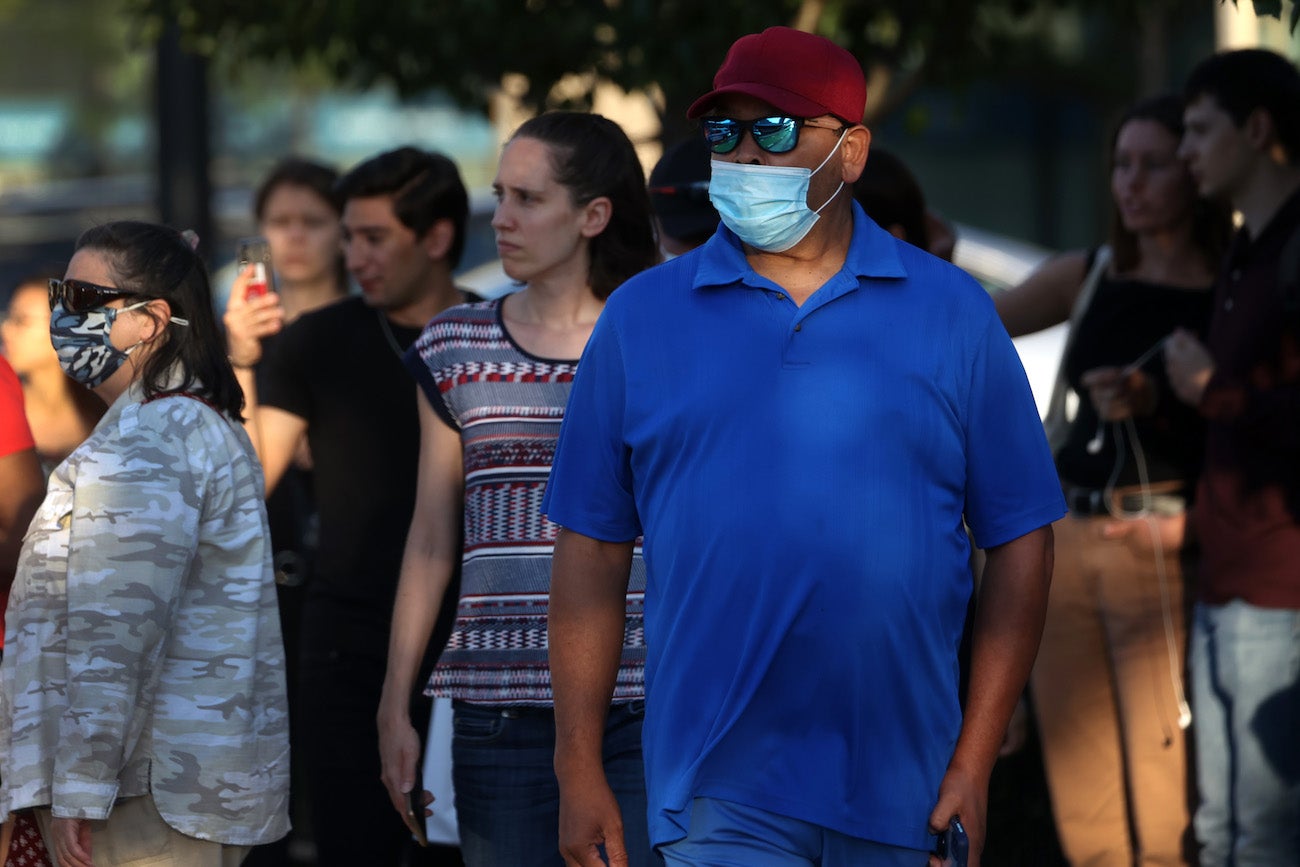
Passengers on board and eye witnesses of the collision described a jarring scene.
“There were big crowds of people rushing to get out of the train. One girl had blood all over her face,” Miltch Pierre, 21, who was working inside nearby Blaze Pizza on Commonwealth Avenue at the time, told the newspaper. “I saw two or three get taken away on ambulances, people in neck braces. It was wild.”
Here’s what we know about the crash — and the investigation — so far:
What happened, according to the MBTA
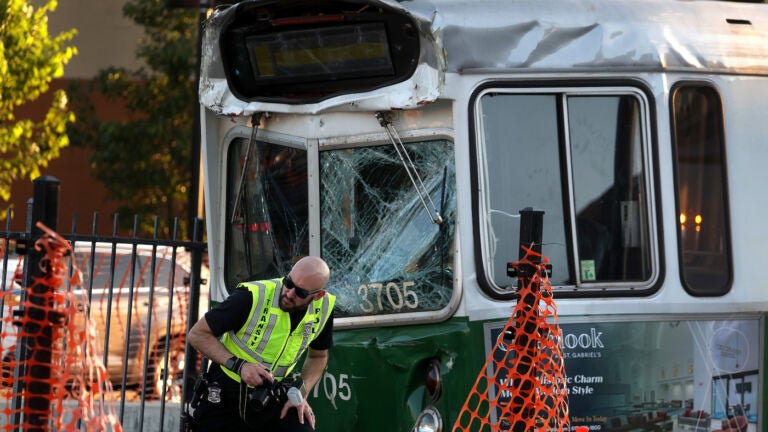
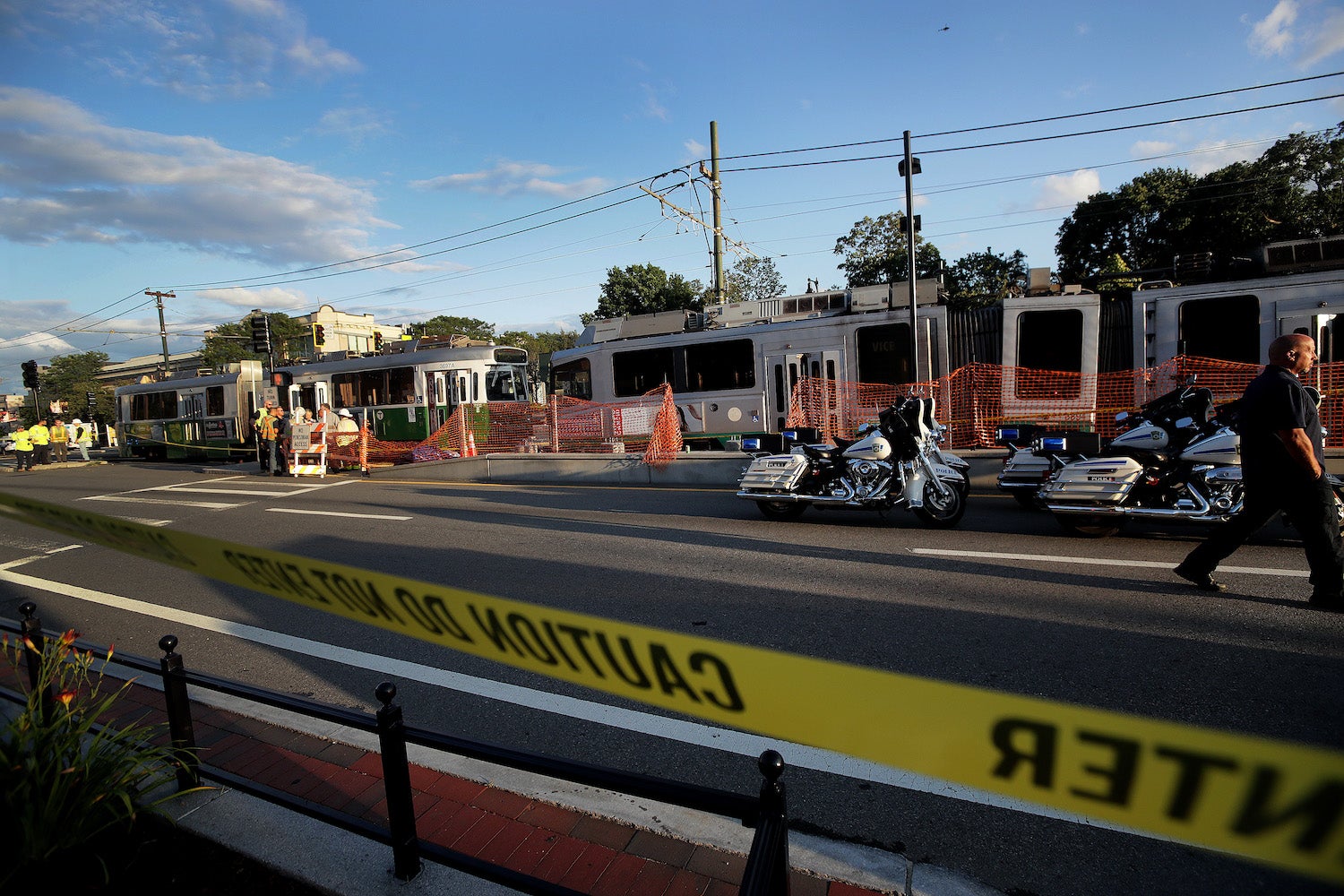
Two Green Line B branch trains were heading west on Comm. Ave. on Friday evening when the trailing train collided with the train ahead of it just after 6 p.m., MBTA General Manager Steve Poftak told reporters at the scene.
Advertisement:
According to Poftak, Boston EMS said all of the 25 people injured were conscious and alert, and their injuries were nonlife-threatening.
“Obviously our first thoughts are with our passengers and our employees who were injured,” Poftak said.
According to Poftak, MBTA infrastructure appeared damaged as a result of the crash, and some of the trains’ axles were de-railed.
The MBTA’s safety department was conducting an investigation at the crash site on Friday, as were the agency’s state and federal partners, Poftak said.
He did not offer any details regarding what may have gone wrong and informed reporters at several times during the press conference that he would not speculate on what exactly happened.
Advertisement:
“We will obviously get to the bottom of this,” Poftak said. “This should not happen, and we will find out why it happened, and we’ll ensure that it won’t happen again.”
Asked if there were any safety devices on board the trains that would have prevented a crash like this one from happening, Poftak said there is not a specific mechanism.
“Obviously we have drivers and we have several layers of braking systems that could be used,” he said. “Part of our analysis will be what speed was the trailing vehicle driving at and then were any of these systems activated.”
Advertisement:
On Saturday, the MBTA placed one of the four operators on board the trains at the time of the collision on leave based on information uncovered in the investigation, MBTA spokesman Joe Pesaturo told the Globe.
The four operators were among those injured in the crash.
Pesaturo declined to name the driver who was placed on leave. According to the newspaper, the operator has worked for the MBTA for seven years and was piloting the first car of the two-car train that struck the other trolley from behind.
Regular service on the line resumed Saturday morning.
What passengers and witnesses said
Onlookers watch investigators at the scene of the crash. Barry Chin/Globe Staff
Flavio Correa, a 45-year-old Allston resident, was on one of the trains with his wife, according to the Globe.
Advertisement:
Neither were badly injured. Correa bumped his elbow and knee, and his wife hit her chest.
“It was so fast,” Correa said. “Very, very fast.”
Some passengers suffered cuts on their legs and arms, Correa told the newspaper. He saw one girl with a small cut on her chin.
According to the Globe, many of the injured passengers were brought to Massachusetts General Hospital and St. Elizabeth’s Medical Center.
A spokeswoman for MGH said Saturday that five people were treated and released. The newspaper did not hear back from representatives for St. Elizabeth’s and Steward Health Care.
Pierre, the Blaze Pizza employee, said he felt the restaurant shake — something he never felt before.
Advertisement:
“I was like, what could possibly be shaking everything this hard?” Pierre said. “When I turned around, there was a bunch of smoke outside.”
Boni Lacourse, 23, and Matt Heerema, 24, two recent Boston University graduates, were on board an inbound train that traveled next to the two trolleys not long after the crash, they told the Globe.
“I saw the aftermath,” Lacourse said. “I saw one of the train drivers come out of the train — she was very disturbed, as you could imagine. She came out and was wanting to make sure everybody was OK and everybody was able to get off the train.”
Advertisement:
Their Friday evening trip on the T was the first time both Lacourse and Heerema were on the train since the COVID-19 pandemic began last year, they said.
“We were going downtown, and to see this, it doesn’t make you feel great,” Lacourse said. “It’s a rare occurrence, but it doesn’t make you feel great.”
Where the NTSB investigation stands
Barry Chin/Globe Staff
Four NTSB investigators, with specialties in “operations, crashworthiness, and human performance,” were at the crash site on Sunday, Gabris, the spokesperson, told the Globe.
Gabris said “parties to the investigation” have been identified. She did not release any details about the operator who was placed on leave.
Advertisement:
“NTSB does not release the names of those involved in the accidents we investigate,” Gabris said.
While NTSB investigations involving injuries typically take between 12 and 24 months to wrap up, the agency is expected to release a preliminary report on the crash in the coming weeks, Gabris said.
The Suffolk County District Attorney’s Office has also indicated it is investigating the incident.
Gov. Charlie Baker said he’s ‘anxious to find out what happened’
Barry Chin/Globe Staff
Gov. Charlie Baker, at a housing event in Everett on Monday, told reporters he spoke with Transportation Secretary Jamey Tesler several times about the crash during the weekend, The State House News Servicereports.
“I’m really anxious to find out exactly what happened because this could have been a far more significant incident than it was given the estimates that are out there about how fast that train was traveling when it hit the other train,” Baker said.
Advertisement:
Baker anticipates the NTSB’s investigation to be “the final word on this,” he said. Once the agency publishes its findings, the Baker administration will “work to move on the things that they recommend,” he said.
According to the Globe, the NTSB has investigated two other crashes on the Green Line, including a 2008 collision in Newton in which a train operator was killed after she went through a stop signal and hit a train stopped ahead of her.
The NTSB found that Ter’rese Edmonds, 24, suffered from fatigue and could have fallen asleep briefly while at the controls, the newspaper reports.
The agency criticized the MBTA that year — and again the following year when Green Line operator Aiden Quinn crashed his train near Government Center while he was texting — for not putting in place technology that stops a train if it moves too quickly toward an obstacle.
Advertisement:
The technology has so far been installed on the MBTA’s other rail lines, according to the Globe.
Pesaturo told the newspaper the Green Line is set to receive the $170 million upgrades next year.
Newsletter Signup
Stay up to date on all the latest news from Boston.com
Boston.com Newsletter SignupBoston.com Logo
Stay up to date with everything Boston. Receive the latest news and breaking updates, straight from our newsroom to your inbox.
Khuzestan in southwest Iran has been the site of large-scale unrest since July 15. In the intervening two weeks, the protest has also spread to a number of other regions, including Tehran, Tabriz, Bushehr, and Isfahan. This growth trend will continue, even in the face of violent crackdowns by the regime officials. Those crackdowns will intensify in the days and weeks to come, especially following the August 3 inauguration of the regime’s new president, Ebrahim Raisi.
Raisi was “selected” on June 18, but the vast majority of the Iranian population boycotted the political process, recognizing that regime authorities had already cleared the way for his victory after the regime’s Supreme Leader Ali Khamenei made it clear that he had settled on Raisi as his choice to succeed the outgoing regime’s President Hassan Rouhani. By all accounts, that choice was due to Raisi’s long history of supporting and participating in the repression of dissent, particularly that which is associated with the organized opposition group, the People’s Mojahedin Organization of Iran (PMOI/MEK).
In the summer of 1988, the MEK was the prime target in a campaign of mass executions that claimed over 30,000 lives. When that campaign began, Raisi was the deputy public prosecutor in Tehran, and he soon became one of the key figures on the regime’s principal “death commission.” In that capacity, he interrogated political prisoners in Evin Prison and later in facilities across the country in order to determine which of them still harbored sympathy for the MEK or resentment against the clerical regime. All those who refused to demonstrate abject submission to the ruling theocracy were sentenced to be executed by hanging or by firing squad.
For years after the 1988 massacre, Raisi compounded his legacy as a hanging judge and an advocate for all forms of corporal punishment.
Despite the complete lack of popular support, Khamenei handed Raisi control over the Iranian judiciary in 2019. This served to set the stage for Raisi to revive his presidential campaign in an entirely non-competitive field.
Raisi’s control over the judiciary advanced the regime’s interests over those of the people, and even if it helped to spark nationwide revolt within months of his appointment, it also contributed to the intensity of the regime’s crackdown and forced the protest movement back underground for several weeks. Whereas a previous uprising in January 2018 resulted in roughly 60 deaths over the course of about a month, the November 2019 uprising was met with mass shootings almost immediately, which killed over 1,500 people in a matter of days.
Furthermore, at least 12,000 people were arrested, and Raisi’s judiciary promptly began a torture and extended interrogation campaign, which lasted for months. Amnesty International reported on that crackdown in a report titled Trampling Humanity, and when Iranian authorities began cracking down on the recent Khuzestan protests, the human rights organization issued a statement affirming that it saw “chilling echoes of November 2019, when security forces unlawfully killed hundreds of protesters and bystanders but were never held to account.”
The statement emphasized the need to end the “impunity” that Tehran has long enjoyed in the absence of serious international measures to punish leading officials or institutions for such human rights abuses. Previously, Amnesty issued a statement reacting to Iran’s sham election in which it said, “That Ebrahim Raisi has risen to the presidency instead of being investigated for the crimes against humanity of murder, enforced disappearance, and torture is a grim reminder that impunity reigns supreme in Iran.”
That impunity will be further reinforced by Raisi’s inauguration, leading to a further increase in repression of the ongoing protests in Khuzestan and surrounding areas. However, there does not appear to be much question about whether those protests will still be going on after Raisi takes office. So far, the activist community has weathered the impact of at least a dozen shooting deaths and perhaps many more. The full extent of the crackdown remains to be determined, in part because Tehran has cut off the internet in order to slow the spread of information.
On July 10, NCRI President-elect Mrs. Maryam Rajavi delivered a speech to the first session of the Free Iran World Summit and said, “In the new era, the hostility and enmity between the Iranian regime and society will intensify more than ever before.”
First day of Free #Iran World Summit 10 July 2021
The clerical regime faces the impasse of impending overthrow; the democratic alternative marches on towards victory. #FreeIran2021pic.twitter.com/ZGs1UrC2gw
Mrs. Rajavi also spoke of Raisi’s pending inauguration as a “litmus test” for Western commitment to principles of universal human rights and popular sovereignty throughout the world. Iran’s current unrest is arguably a preview of that test.
The Khuzestan protests were plainly sparked by water shortages coinciding with rising summer temperatures, but they specifically called attention to the regime’s indifference to industrial and ecological policies that contributed to those shortages. This, in turn, speaks to the widespread recognition of Tehran’s overall indifference and the failure of any leading authority offering a meaningful response to the people’s grievances.
Although Khamenei recently delivered a speech that superficially conveyed sympathy to the protesters, he also criticized their movement for inviting exploitation by “enemies” and brushed aside their complaints as something that would be addressed under the next presidential administration. It is not lost on the Iranian people that that administration is being installed for the express purpose of silencing dissent, not listening to it. The international community should be every bit as aware of this situation and should be taking measures right this moment to discourage Tehran from stepping up its repression even further after August 5.
The Free Iran World Summit offered concrete recommendations for how to accomplish this. Many speakers at that three-day event, including policymakers from various political parties in the US, Britain, and Europe, encouraged Western governments to press for a formal commission of inquiry at the United Nations, focusing on Raisi’s role in the 1988 massacre and broadening out to include other officials and other crimes. Such an inquiry would go a long way toward demonstrating to the Iranian regime that its forthcoming era marks the end of its era of impunity and that if the current Khuzestan protests grow into another uprising, the Iranian people will have the world’s support this time.
The data shows that there are more than 58,000 cases on the waiting list, and it continues to climb every year.
In Roanoke alone, there are more than 800 on the backlog. It’s no surprise to Poarch Thompson Law Managing Attorney Rachel Thompson.
“Now, I’ve been doing this under two different administrations,” she said. “This is now my third administration working. And when I first started the number was half of that.”
Because of this pileup, she said the majority of the immigration cases she handles are set for 2025.
“Can you imagine someone who has come here and fled extreme violence in their country and is going through trauma and PTSD?” she said. “And now they are at a point where they are seeking refuge, and they have to be put on the stand five years later at a minimum. Usually, it’s more than that.”
Between the leftover cases from the Obama administration, the Trump administration and the coronavirus pandemic, judges’ dockets are overpacked.
In 2018, the Trump administration issued a quota mandate to speed up deportations and reduce the clogged court system of immigration cases.
The mandate said immigration judges needed to complete at least 700 cases annually in order to earn a satisfactory performance job rating; however, Thompson said the measure caused more problems.
“That caused a frenzy to try to get cases through the door and it actually backfired,” she said. “Cases can’t be handled like that because the judicial system under the Department of Justice is not equipped. It’s inefficient.”
Therefore, Thompson is pushing for a separate judicial system that would handle immigration cases. The idea is to create a federal district court under Article I, which is the same power used to create the system that handles bankruptcy and some tax cases.
“There’s been a huge push for that in Congress. But until that happens we are only going to see that backlog get larger,” Thompson said.
There's been a ton of demand to buy a new home as mortgage rates have hovered close to record lows for the majority of the year. But in June, pending home sales fell 1.9% compared to May, according to the National Association of Realtors. And that could be a sign that the housing market is finally starting to calm down.
Start your journey to financial success with a bang
Get free access to the select products we use to help us conquer our money goals. These fully-vetted picks could be the solution to help increase your credit score, to invest more profitably, to build an emergency fund, and much more.
By submitting your email address, you consent to us sending you money tips along with products and services that we think might interest you. You can unsubscribe at any time. Please read our Privacy Statement and Terms & Conditions.
Will buyers soon enjoy lower home prices?
Pending home sales refer to sale contracts to purchase a home that have been signed but not yet closed upon, and it's a measure of the strength of the housing market. At this point, home prices are sitting at record highs, but that's been a deterrent for many buyers.
In May, home prices rose 17% compared to the previous May, according to the S&P Case-Shiller national home price index. That represents the largest annual gain on record, and it could explain why pending home sales were down last month.
Of course, low real estate inventory has been an issue as well. In fact, a big reason home prices have soared this year is that there haven't been enough properties for buyers to choose from. So what's been happening is that buyers have been duking it out over the same limited homes, trying to outbid one another, and driving home prices up.
Now Realtor.com does report that the number of newly listed homes in June rose 5.5% compared to June of 2020. But on a whole, inventory is still well below normal levels. And that's making it a very tough market for today's buyers to navigate.
Should you buy a home right now?
Based on where home prices are sitting and the amount of competition on the market, now's not really an ideal time to be buying, even with mortgage rates being so competitive. But if inventory slowly starts to increase and buyers start getting more conservative with how much they'll pay for a home, then the situation could improve later on in the year.
If you have a compelling reason to buy a home now -- say, your lease is coming to an end and you don't want to renew it for another year -- then you may want to move forward with your home search. Otherwise, it could pay to sit tight for a while.
There's a strong chance that mortgage rates will remain competitive well into 2022, and possibly beyond. Or, to put it another way, if you remove yourself from today's tough housing market and wait things out, you won't necessarily lose out on the chance to lock in a competitive interest rate on a home loan. What you may do, however, is spare yourself a world of stress and avoid overpaying for a home that would normally sell for a lot less.
Furthermore, waiting for more inventory to reach the market means you'll be less likely to wind up settling for a home you're not really in love with. That alone makes waiting things out worthwhile.



:strip_exif(true):strip_icc(true):no_upscale(true):quality(65)/d1vhqlrjc8h82r.cloudfront.net/08-01-2021/t_2540e611d7fa4d3390327ddb028d3847_name_Video__18_.jpg)