PARIS, Jan 4 (Reuters) - Egyptian authorities have informed France of the imminent release of political activist Ramy Shaath from detention, the French foreign ministry said on Tuesday.
"The Egyptian authorities informed us yesterday of the imminent release of Ramy Shaath," foreign ministry spokeswoman Anne-Claire Legendre told reporters in a daily briefing. "We continue to follow the situation with the utmost attention."
Register now for FREE unlimited access to Reuters.com
Shaath, a member of several secular political groups in Egypt and a co-founder of Egypt's pro-Palestinian Boycott, Divestment and Sanctions (BDS) movement, was arrested in June 2019 and held in pre-trial detention on accusations of aiding a terrorist group.
In April 2020 he was placed on a terrorism list along with 12 others, a decision that was upheld by Egypt's highest civilian court in July 2021.
Shaath's French wife Celine Lebrun Shaath, who was deported from Egypt following his arrest, has lobbied the French government to pressure Egypt to release him.
In a statement last month, several NGOs questioned President Emmanuel Macron on the fate of Shaath, a year after the French leader said he had brought up his case with Egyptian President Abdel Fattah al-Sisi.
However, at the time Macron made it clear that human rights would not determine his economic and military ties with Cairo.
France said in May it would deliver 30 Rafale warplanes to Egypt from 2024 in a 4 billion euro ($4.8 billion) deal, as it strengthened its military partnership with Cairo.
Register now for FREE unlimited access to Reuters.com
Reporting by John Irish; Editing by Alex Richardson
A decision on disbarment for a Teton County prosecutor who violated seven rules of professional conduct is still pending in the Wyoming Supreme Court, more than seven months later.
A Wyoming State Bar tribunal recommended former Teton County deputy prosecutor Becket Hinckley be disbarred in May, after a week-long hearing on his conduct during a 2015 trial that sentenced Josh Black to life in prison on assault charges. The state Supreme Court makes the final call on disbarment.
A three-person Board of Professional Responsibility panel found in the hearing that Hinckley had knowingly lied in court, failed to secure certain records in the case, disobeyed direct orders from a judge, made inappropriate comments during the trial and failed to follow up on warrants and preservation letters with law enforcement.
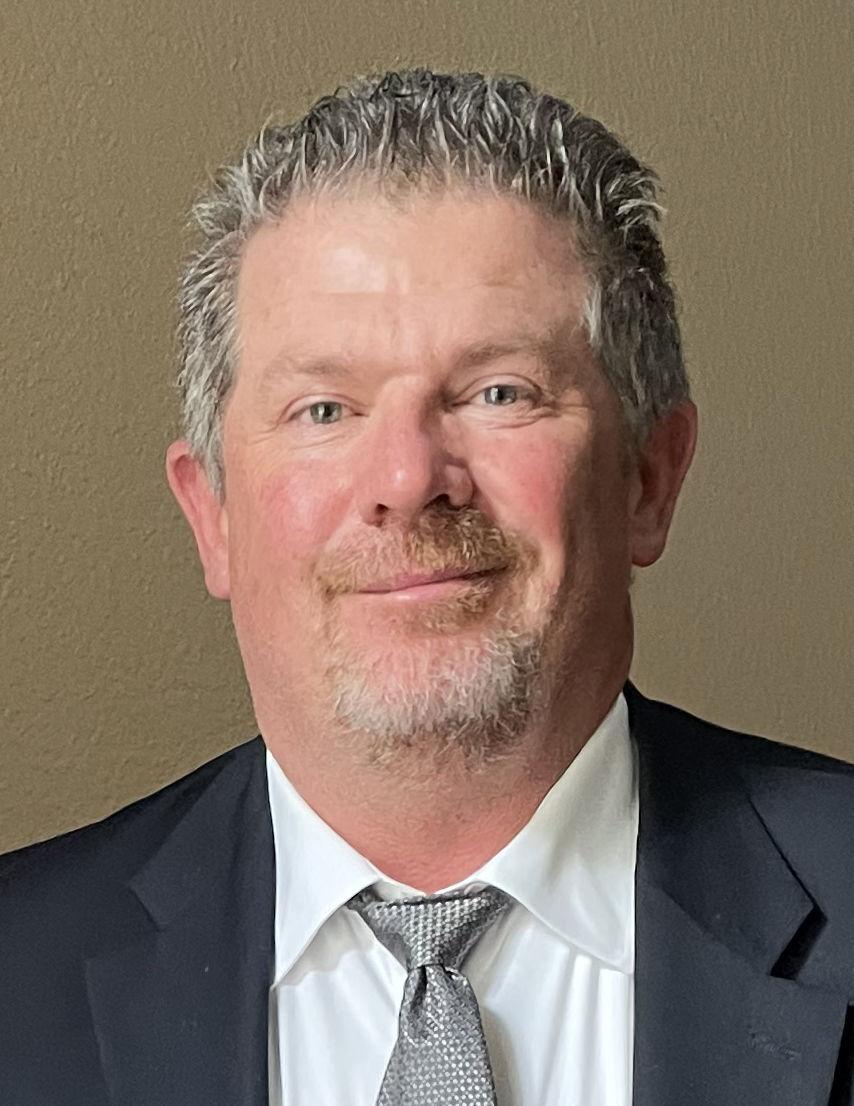
Hinckley
Courtesy Photo
Bar counsel Mark Gifford said at the conclusion of the hearing that the state’s highest court typically rules on disbarment decisions (though they are relatively rare) within three months of a recommendation. The process may be drawn out longer if Hinckley appeals the decision, but that can’t happen until the Supreme Court rules.
Gifford said that only once in roughly the last 10 years has the court disagreed with a recommendation for disbarment.
Chief Justice Kate Fox said she can’t comment on the decision since it’s still under the court’s advisement.
“As with every other case before us, the Supreme Court takes the time necessary to review the record, research the law, and issue a well-reasoned opinion,” Fox said in an email to the Casper Star-Tribune last week.
The May hearing, held in Casper, was the first in the state to be open to the public following a September 2019 rule change that made the practice standard.
Black was convicted of assault after his then-girlfriend was badly injured while living with him in Jackson, sustaining a fractured cheek bone and nasal passage, a cut that needed stitches near her eye, and bruising and bleeding in her brain. Blood found on Black’s shirt matched hers, but blood in the victim’s car and skin under her fingernails did not match his. He has maintained his innocence since the beginning.
During the bar tribunal, Hinckley admitted he had been “sloppy and negligent” when he failed to produce evidence repeatedly ordered by a judge in Black’s case. Court records show that records from Facebook and Verizon, which Black said would have proved he wasn’t with the victim at the time of the attack, were not obtained despite Hinckley telling the judge at least eight times that he was trying to track them down.
A Teton County jury found Black guilty of the assault, and two prior violent felony convictions from California meant he was sentenced to life as a “habitual criminal.”
Black’s conviction was reversed by the Wyoming Supreme Court in 2017. The court wrote in its decision that there was “no question” of prosecutorial misconduct in his trial.
Black’s case was sent back for a new trial in Teton County, where Hinckley again represented the state. He was taken off the case eight months later, after again failing to produce the evidence. Black took a deal, pleading no contest to the charges to drop the habitual criminal designation. He was sentenced to six and a half to 10 years in prison, and had already served four. After finishing his sentence and fighting for good time on his reversed life sentence, he was released to the Casper Reentry Center in January 2020 for a two-month stint before getting out.
Hinckley, who comes from a long line of Wyoming lawyers and judges, resigned as a prosecutor in Jackson in 2019. Jeffrey Donnell, a retired judge who sat on the three-person tribunal to determine his misconduct, said in delivering their decision that he had known Hinckley since he was 6 years old.
“I’m proud of my career, but I’m not proud of this,” Hinckley said at the time of the tribunal’s decision. “I failed the people of Wyoming, the people of Teton County, I failed myself, and most importantly failed [the victim] and her family.”
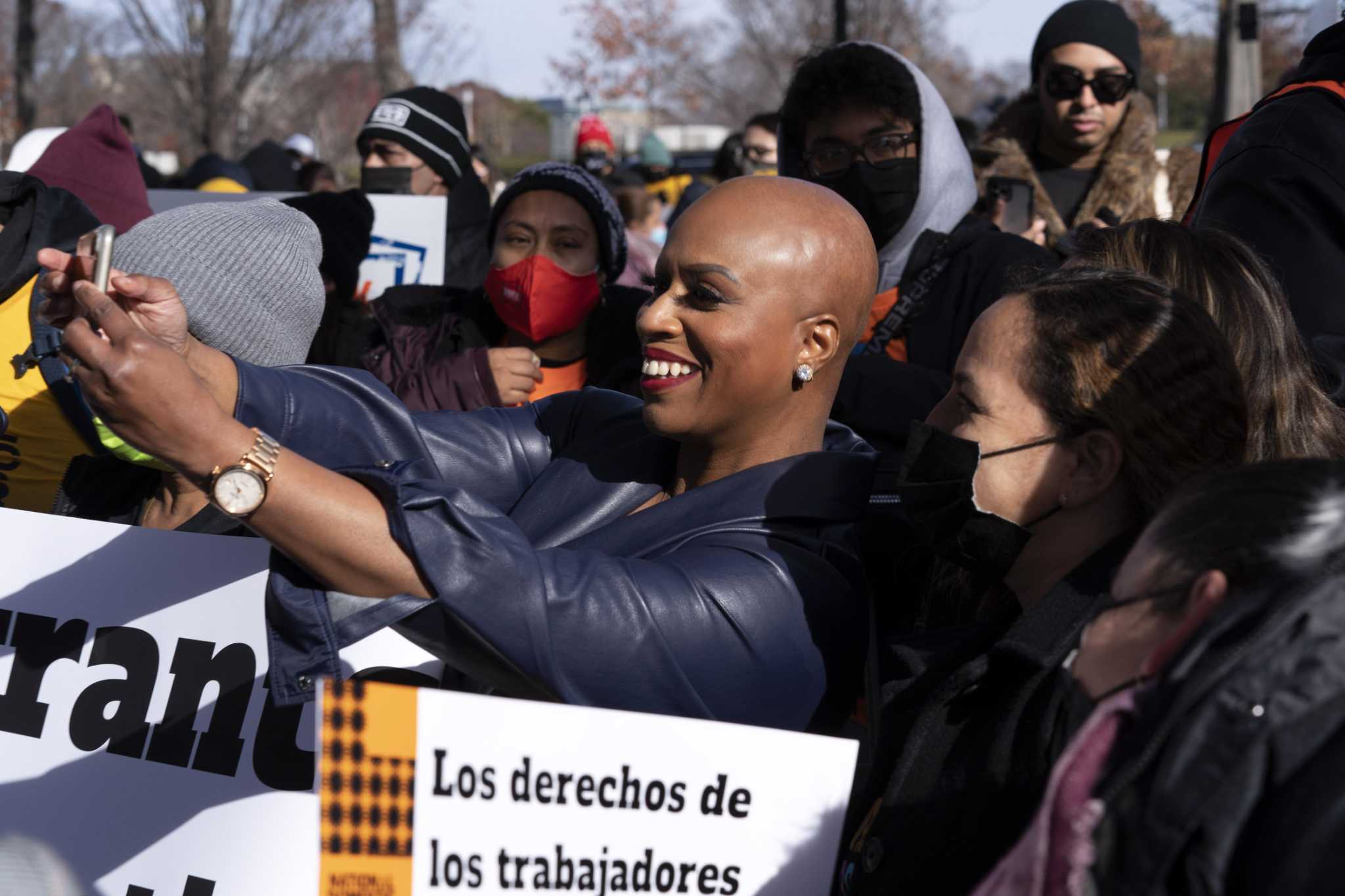
A recent report shows that if pending immigration bills in Congress were passed, hundreds of thousands of undocumented immigrants in the Houston area could benefit and become legal residents or citizens, improving their quality of life.
The Center for Migration Studies, a New York-based immigration think tank, found that if the American Dream and Promise Act of 2021 were to pass, 12 percent of greater Houston’s 576,500 undocumented immigrants — 70,600 people — would be eligible for green cards, allowing them to live and work in the U.S. with authorization and free from the threat of deportation.
The bill would protect undocumented immigrants brought to the U.S. as children as well as immigrants eligible for Temporary Protected Status in 2017. Venezuelans and others allowed to stay in the country under Deferred Enforced Departure would also receive protections under this legislation.
The American Dream and Promise Act passed in the House of Representatives last March but has failed to get traction in the Senate, which has a 50-50 partisan split.
Under the Dream Act of 2021, which protects childhood arrivals, an estimated 388,000 undocumented immigrants in Texas would be eligible for permanent residence — more than any other state, except California. Nearly half of these immigrants have been living in the U.S. for 15 years or more, according to the center’s calculations.
The authors of the report also cited multiple studies showing that legalization programs - which haven’t been passed by Congress for decades - benefit immigrant families and their citizen children by creating labor opportunities, increasing access to education and removing the stressors around the fear of deportation.
Failure to pass reform has also affected the immigration legal system, which is increasingly more backlogged, with massive delays for certain visas and asylum cases.
The report found that under the Citizenship for Essential Workers Act, 408,800 people in Greater Houston, or 71 percent of the undocumented population, would be eligible for legalization. The bill would provide green cards for essential workers, along with their kids, spouses and parents.
Houston is among the top four cities in the country that would benefit from the passage of the Essential Workers legislation, though the bill has yet to pass in either house.
Shares of the embattled Chinese property developer Evergrande Group have once again been suspended from trading, the company announced Monday, pending the release of “inside information.”
Evergrande, the world’s most indebted developer, is struggling to repay more than $300 billion in liabilities, including nearly $20 billion of international market bonds that were deemed to be in cross-default by rating firms last month after it missed payments.
The property developer missed new coupon payments worth $255 million due last Tuesday, though both have a 30-day grace period.
Chinese property firms have struggled in the wake of Beijing’s drive to curb excessive debt in the real estate sector as well as rampant consumer speculation.
“At the request of the company, trading in the shares of the company was halted at 9 a.m. on Jan. 3, 2022, pending the release by the company of an announcement containing inside information,” the group said in a short statement on the Hong Kong stock exchange.
It previously saw a period of suspended share trading back in October.
The troubled developer has set up a risk management committee with many members from state companies and said it would actively engage with its creditors.
Local media reported that a city government in the Chinese resort island of Hainan had ordered Evergrande on Dec. 30 to demolish its 39 residential buildings within 10 days, due to illegal construction.
The buildings stretched over 435,000 square meters, the reports added, citing an official notice to Evergrande’s unit in Hainan.
On Friday, Evergrande dialed back plans to repay investors in its wealth management products, saying each investor in its wealth management product could expect to receive 8,000 yuan ($1,257) per month as principal payment for three months irrespective of when the investment matures.
The move highlights the deepening liquidity squeeze at the property developer.
The provincial government of Guangdong – where the firm is headquartered – is currently overseeing Evergrande’s debt restructuring process.
“The market is watching the asset disposal progress from Evergrande to repay its debt, but the process will take time,” said Conita Hung, investment strategy director at Tiger Faith Asset Management.
“And the demolition order in Hainan will hurt the little homebuyer confidence remained in the company.”
Evergrande said last week 91.7% of its national projects have resumed construction after three months of effort. Many projects were halted previously after the developer failed to pay its many suppliers and contractors.
Shares of Evergrande shed 89% last year, closing at HK$1.59 on Friday.
Its electric vehicle (EV) unit, China Evergrande New Energy Vehicle Group, reversed early losses to rise 14% in early afternoon trade on Monday while property management unit Evergrande Services also turned around from the red to rise 1%.
Evergrande's woes have had knock-on effects throughout China’s property sector with some smaller firms also defaulting on loans and others struggling to find enough cash.
Bloomberg News calculates that China’s property firms need to stump up some $197 billion to cover maturing bonds, coupons, trust products and deferred wages to millions of migrant workers in January.
Amidst the pandemic's second wave in the fall of 2020, Tiffany Swedeen, RN, a nurse in recovery from substance use disorder, was struggling.
Working at an intensive care unit near Seattle for the better part of 16 years, she was used to caring for the sickest of the sick and feeling confident in her skills and abilities.
Suddenly though, "I didn't anymore," Swedeen said. Pandemic protocols changed frequently, and whether any of the COVID treatments helped or harmed was hard to tell at first. "I would have nightmares about the patients that I couldn't save, and it was most of the patients."
She had been sober for four and a half years and had built a platform to help other nurses navigate the recovery process. That made it all the more painful to feel her own resolve crumbling.
After failing to get support from her family over the holidays, Swedeen went to work on Jan. 3, 2021, feeling "alone" and "unworthy." She put two more patients on ventilators and left her shift at the hospital with several stolen syringes of high dose fentanyl. She used them at home and blacked out for most of the day.
Tiffany Swedeen, a nurse who works outside of Seattle, relapsed in January, 2021.
Swedeen wasn't feeling suicidal "in any active sense." But, she said, "I felt impulsive and reckless and wanted to escape my feelings."
Within an hour of returning to the hospital for her shift on Wednesday, Jan. 6, 2021, her manager asked to meet with her. She looked Swedeen in the eyes and said she was sorry.
"I wanted to disappear," Swedeen said.
The Scale of the Problem
The pandemic's heightened stressors, longer hours, and short-staffing without any clear end in sight has led some experts to suggest that the battle with substances -- mainly alcohol and opioids, but also methamphetamine -- has intensified in the field.
Of the roughly 4.2 million nurses in the U.S., conservative estimates suggest that 1% to 3% may have a substance use disorder. Other experts interviewed by MedPage Today suggested an even higher proportion -- closer to one in 10 nurses.
During the pandemic, around one in five nurses said their alcohol consumption had increased, and 3% said they had increased their substance use, according to a survey published by the American Nurses Foundation in October. Among critical care or intensive care nurses, estimates of increased alcohol consumption jump to one in three.
There's currently no reliable data on the number of nurses whose substance use slid into the realm of a disorder or on how many with an addiction that had been under control relapsed during the pandemic.
Because of stigma around substance use and fear of losing their jobs or their licenses, most nurses with substance use problems do not seek out help voluntarily, said Deborah Koivula, RN, CARN, in her role as the Eastern Regional Coordinator for the Statewide Peer Assistance for Nurses (SPAN) education and advocacy program in New York. (See sidebar on how most nurses with substance use issues do not seek help voluntarily.)
In fact, nurses typically engage in treatment late in the process of their disease. Nine out of 10 of the nurses who connect with SPAN do so only after a legal or employment issue, such as being caught diverting narcotics or driving under the influence, prompts them to ask for help, she said.
And a recent MedPage Today investigation found enrollment in alternative-to-discipline programs -- the route widely considered nurses' best chance at recovery, without disciplinary action -- is "tragically small," according to one nursing expert.
Enrollment in such programs could be an indicator of trends, but programs contacted by MedPage Today reported widely varying experiences.
Rodrigo "Rigo" Garcia, MBA, MSN, APN, CRNA, of the Parkdale Center in Chesterton, Indiana, said he "absolutely, 100 percent yes" has been seeing more nurses relapse during the pandemic. When he spoke to MedPage Today in August, in an interview monitored by a media relations representative, he cited both increases in enrollment in treatment and in the alternative-to-discipline programs he oversees.
On the other hand, nursing boards and commissions in Oregon, Ohio, and Washington told MedPage Today that the number of nurses enrolling in their alternative-to-discipline programs had either remained consistent with pre-pandemic enrollment or actually declined.
Oregon's State Board of Nursing hasn't seen any changes in the number of nurses who entered either the alternative-to-discipline program or public probation in 2020 or 2021, said its communications manager, Barbara Holtry. However, she cautioned: "We have no way of knowing how many other nurses may be out there who have sought treatment" privately.
California saw a decline overall in the number of participants in its recovery programs for nurses and other healthcare professionals (including dentists, physicians, veterinarians, and other healthcare professionals) from July 1, 2020 to June 30, 2021, according to Vincent Miranda, an information officer specialist for the California Board of Registered Nursing. But it's unclear whether that lower enrollment should be attributed to the pandemic, he said, because enrollment has declined every year since 2010, with the exception of 2013.
Miranda attributes the decline to stigma and a "knowledge gap," citing a recent study in the Journal of Nursing Regulation that found nurses would benefit from better guidelines and education around substance use problems.
Problem Signs
However, there have been worrying signals that the problem is deeper than the story told just by enrollment numbers.
Despite "steady" enrollment in his state's alternative-to-discipline program for the last 5 years, Grant Hulteen, who oversees Washington Health Professional Services, said he's now seeing staffing issues at testing sites used by programs to track nurses' sobriety and keep them accountable.
Most alternative-to-discipline programs require nurses to submit to random urine analyses and other tests. But COVID-related staffing problems have shut down or limited some collection sites. Some sites no longer have the ability to conduct special tests, such as hair and blood tests, Hulteen said.
Because of increasing nursing shortages and the continuing uncertainty brought by new variants, it may be that the healthcare environment hasn't yet stabilized enough for some nurses to begin to seek help, said Koivula.
"That pending wave is still out there," she speculated.
"Just like going through any natural disaster," she said, "it's often after the fact that first responders are realizing the trauma that they've experienced."
Another sign that some substance use problems are still under the radar during the pandemic is the severity of those who do reach treatment.
The typical nurse-participant entering one of Garcia's addiction recovery programs 2 years ago was someone who had diverted drugs for 3 to 6 months and who was experiencing a moderate level of mental health issues, depression, or anxiety, he said.
"Now, we're seeing drug abuse for a year and a half. We're seeing advanced stages of mental health, depression, and anxiety. We're seeing helplessness and hopelessness. We're seeing suicide ideations increase," said Garcia, a volunteer member of the American Association of Nurse Anesthesiology's Peer Assistance Advisors Committee and paid speaker for Alkermes, the maker of extended-release naltrexone (Vivitrol) for substance use disorder treatment.
Intake numbers might not have changed due to the high demand for nurses in the workforce right now, suggested Tracy Traut, director of the Indiana Professionals Recovery Programs. But the nurses who have walked in her door since the pandemic started are much farther along in their addiction.
"[T]heir pathology and the number of things that they're dealing with in terms of mental health and bad, maladaptive coping mechanisms has tripled," Traut explained. "We have people who are in their 40s that are all of a sudden popping up and using drugs at work because they're trying to cope with all the stress in the middle of COVID."
Another significant trend she's seen as the pandemic unfolded is the rise in amphetamine abuse among nurses struggling with addiction. Before November 2021, the top drugs of choice for those in the program were opiates followed by alcohol, Traut told MedPage Today.
"Amphetamines are running neck and neck now with opiates," she said. "It's not just Adderall or cocaine -- it is meth. They are smoking meth."
Kelli Jacobsen, MSW, LCSW, started working with nurses at the Utah Professionals Health Program, an alternative-to-discipline program based in Salt Lake City, a little over a year ago when the pandemic was already in motion.
Throughout her career, she said, it's been pretty typical to see a person with a history of substance use that can be traced back years, perhaps starting with marijuana or alcohol in high school that then took years to progress. Now that profile has abruptly shifted.
"What I've noticed through this pandemic is this rapid development of severe use over such a short period of time," Jacobsen said. At one point a couple of months ago, she recalled, the program had a batch of nurses that self-reported their substance use.
All but two of them "really didn't have much of a substance use history until the pandemic -- maybe 6 months to a year before the pandemic they started, and then it really rapidly progressed during the pandemic."
Vanishing Support for Those in Recovery
Garcia, who is in recovery himself, blames the pandemic: Because everyone on the front lines was so focused on responding to outbreaks, staff did not notice reports of complaints and overlooked clear warning signs -- attributing changes in personality and behavior to pandemic-induced stress.
That was the case for Leah Alanis, RN, a nurse in New Hampshire who has an addiction to alcohol.
Leah Alanis, a nurse in Concord, New Hampshire, struggled to stay sober in 2020.
She mirrored Swedeen and other nurses MedPage Today spoke with in pointing to the one-two punch of the pandemic and holiday-related isolation in pulling the support system out from under her.
She had been going to Alcoholics Anonymous meetings at least four times a week. But when the pandemic hit, those in-person meetings transitioned to Zoom, which wasn't the same for her. Weekly dinners with her sober girlfriends stopped, and other friends began pulling out of her life, afraid that her healthcare exposure might give them the virus, Alanis explained.
While her work in an outpatient urology practice was stressful -- she was calling patients having to tell them their surgeries would be canceled or postponed due to the pandemic -- the real problem for her was that loss of support.
After what began as "one of those, like, 10-day around-the-clock drinking benders -- missing work, missing life" in March 2020, Alanis did not find her way to sobriety until nearly the end of that year.
On three separate occasions, in March, in May, and in July through the early wave of the pandemic, Alanis went through withdrawal and wound up at a local hospital. She begged hospital staff to help get her into an inpatient treatment program, but there were no beds.
Alanis made it to work most of the time, albeit a bit disheveled. When co-workers asked if she was okay, she'd just lie.
The holidays have always been a difficult time, Alanis said. She felt isolated from her family living far away in Texas. The cold, dark New England winters didn't help.
Alanis said she started to drink again after work on Dec. 22, 2020, "and I didn't stop until the 29th, when I physically could not put the bottle to my face anymore."
That day, Alanis texted her boss: "It's either I go to treatment or I'm going to die."
Her boss texted back that she'd been waiting for Alanis to admit she had a problem.
"She said, 'Please, please go get the help you need and come back to us strong,'" Alanis said.
"That text saved my life," she said.
One Day at a Time
Alanis got into "rehab" and has mapped out a route to recovery. She connected with other recovery programs outside of Alcoholics Anonymous, joined an exercise accountability program, and has immersed herself fully in "holistic healing." She also has been working with counselors to understand what drove her to drink so much in the first place.
She was able to renew her license without stipulations after an investigation by the nursing board but has been placed on an "absence monitoring" program at work under which she can be penalized if not compliant.
Alanis, who had reached nearly 1 year of sobriety when she spoke to MedPage Today, said she felt guilty not helping her colleagues on the front lines of the pandemic. She just began training to work as a "runner" at a local hospital on weekends and is learning to trust herself. She knows the environment could test her resilience, but said she's prepared to stop if she finds she isn't doing well and believes "that I'll be able to say ... 'I thought I could do this for you guys, but I can't.'"
For Swedeen, life changed after being confronted by her manager, but she still said she's relieved to have been caught.
"If I would have stayed in that department, under that amount of stress with ... just such easy access to narcotics. I think the outcome would have been probably tragic," she said.
Swedeen reached out to her case manager at the alternative-to-discipline program she's enrolled in, who decided to extend her contract for an additional 14 months. And she resigned from her position at the hospital, in lieu of termination. The nursing commission did not end up revoking her license but did leave a charge of "unprofessional conduct" visible to anyone who searches her name in the National Practitioner Data Bank. She is pursuing her masters' degree in nursing education and hopes in the future to consult on creating curricula for nursing schools and improve substance use prevention and treatment programs for nurses like her.
In the time she has left in the alternative-to-discipline program, Swedeen said, "I will fight tooth and nail to not relapse again."
Last Updated December 30, 2021
Shannon Firth has been reporting on health policy as MedPage Today's Washington correspondent since 2014. She is also a member of the site's Enterprise & Investigative Reporting team. Follow
Kara Grant joined the Enterprise & Investigative Reporting team at MedPage Today in February 2021. She covers psychiatry, mental health, and medical education. Follow